How a rural teaching placement at Yirrkala School led Harry to a full-time role
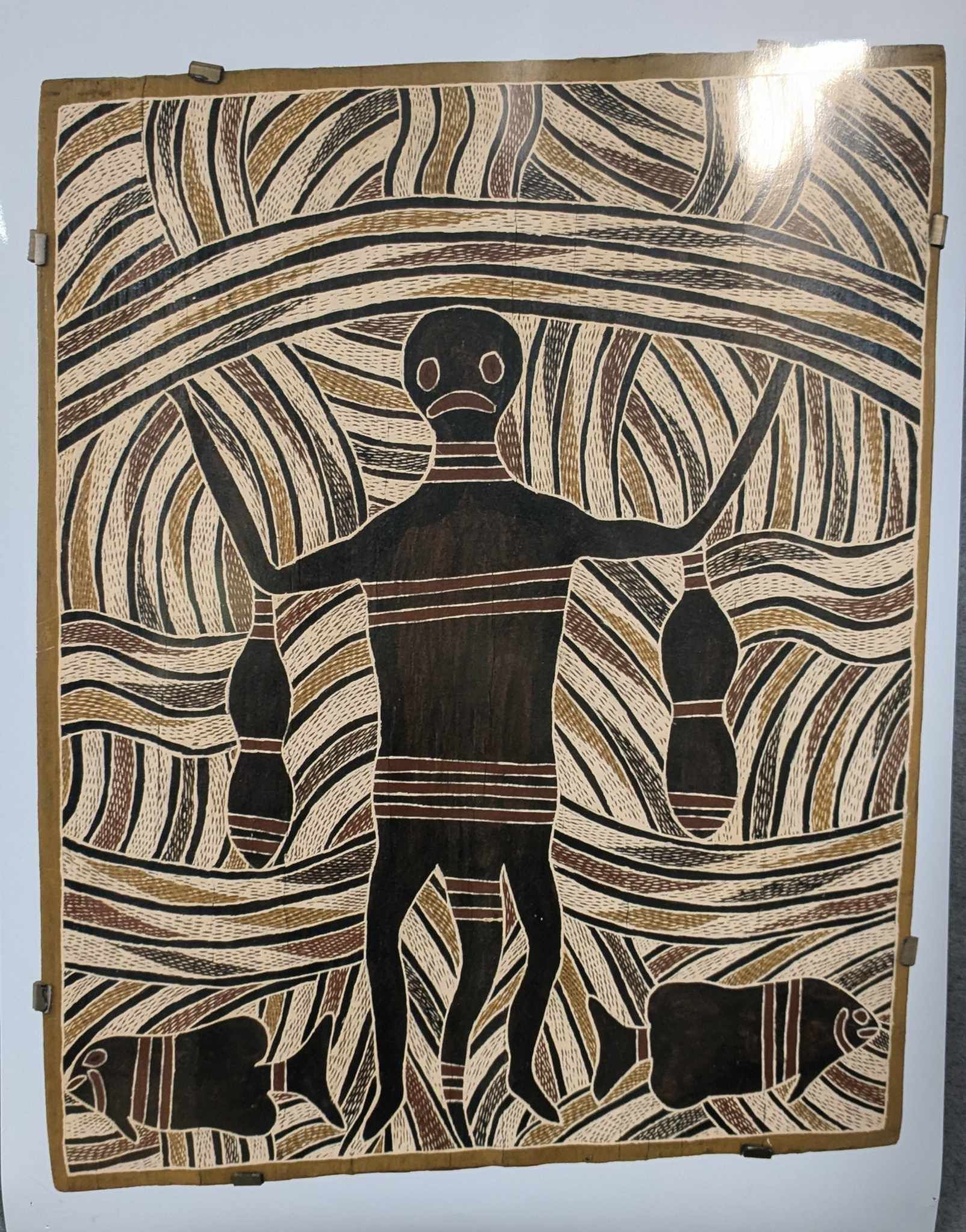
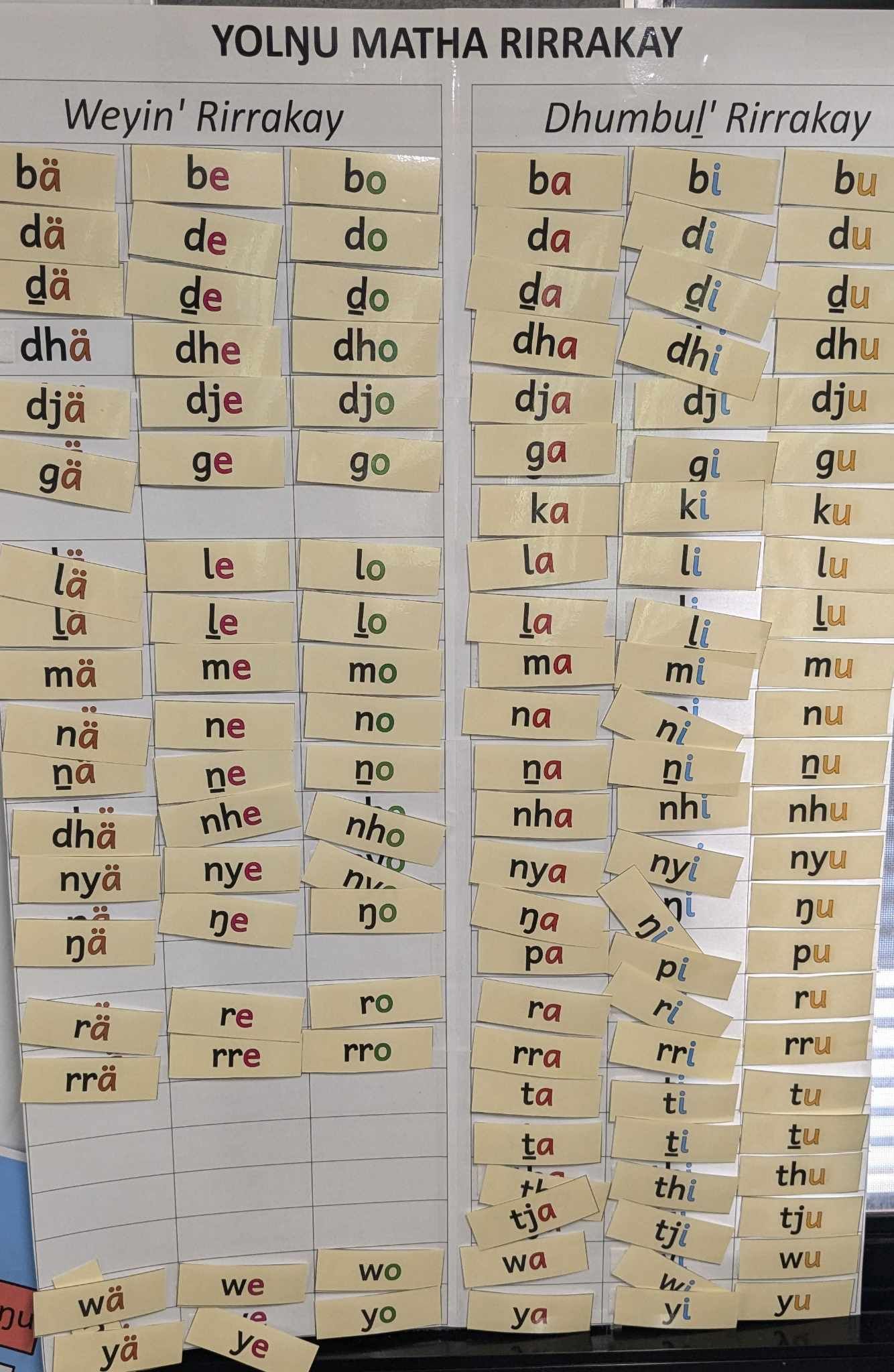
“Both ways” learning recognises the relevance of both western and local knowledge to foster bilingual education. At Yirrkala School in North East Arnhem land, students learn in their local language, Yolngu Martha, and English. For Harry McCallum, going to North East Arnhem land for placement led him to relocate after graduating and become the literacy and numeracy teacher for the year 6/7 class. He now embodies this learning both ways.
After completing a Master of Teaching (Secondary) with a learning area, or specialisation method, in English, Harry found that he also had to continue his learning to better understand the process behind how to learn a language at the early stages.
"I feel like my development just skyrocketed being here, it’s fantastic. I’m teaching the year 6/7s and I’ve been here now for a year and a half. I work with a team teacher, so our class learns in both Yolngu Martha and English. Teaching year 6 and 7, it’s at the bottom-age range of the age bracket that I trained for and that I thought I’d be teaching, but I’ve found it really interesting.”
Completing placement at the Yirrkala School gave Harry early insight into what it could be like to live and work in a community like this. Having always known he wanted to go to a remote area for placement, the teaching partnership between Yirrkala School and the University of Melbourne meant there were networks and opportunities available.
“When I started my teaching masters, I knew I wanted to go remote and I was fortunate enough to be picked to go to Yirrkala School. As soon as I came here, I knew this is where I would want to work. It was actually a school camp that really inspired me. We went to this place in Cape Arnhem and while I felt like an extreme outsider, it really inspired me to get involved in the community.”
Yirrkala School works closely with the Clontarf Academy and STARS program, as well as integrating Learning on Country so that students feel their local culture and Indigenous knowledge embedded into their school experiences.
“I was kind of caught between these two cultures, but there were two other white guys that were a part of the Clontarf Academy who had embraced this remote lifestyle, so I could see the potential. I came here with pretty much no knowledge of the culture, outside of the broad stereotypes, but it was inspiring.”
While moving interstate, and to a remote community, was initially a bit of a culture shock, Harry found that learning the local language and integrating in the community has demonstrated how there can be so much more to being a teacher. While teachers are often seen as the authority figures in a classroom, the Both Ways learning philosophy can be seen from a language perspective, but also between teachers and students.
“It can be very humbling and there’s so much to learn – probably more than you teach. Often the whole point of being a teacher is that you’re the one who does know, but I’m learning their language and culture, and it helps the kids see that it’s okay if you’re trying to understand something new and it takes time. It gets them thinking about their own language and shows them that they’re capable.”
Harry experienced this through his final year capstone project in the Master of Teaching where he completed work on a reciprocal language project. Finding these connections between his course and his latter teaching experience, he’s found that while the course prepared him in many ways, there’s always more to learn. Transitioning from a university environment, where you research theories and frameworks, to being responsible for managing a classroom – something you need real experience in – reinforced the importance of placement.
Building relationships with students, teachers and the local community is foundational to building confidence and connection that helps everyone be successful in the classroom.
“I did my first placement in Melbourne and a second in Yirrkala and they’re obviously very different. The structure of the school day in Yirrkala is so different and there’s a lot more integration between classes so we’re more like a family unit. The kids are so connected, whereas in Melbourne everyone lives so separately – they could be in a suburb 40 minutes away. Here, the kids know where my house is, I see them at the supermarket, and you’re embedded in the community.
There’s a different idea about what success looks like here compared to a metro school. A lot of the time our success is about getting kids to school and helping them feel comfortable at school – not necessarily focusing on getting the best marks. The overall approach is more rounded and you need to prove that you’re worth coming to school for and that your classroom reflects what life is like out in the world so the kids want to come to school.”
This kind of community-centric teaching highlights the importance of a culturally relevant approach to school. For Harry, the Master of Teaching program has inspired him to embrace a life he may never have imagined by staying in Melbourne – but having experienced a rural teaching placement he’s now a part of a thriving community.
I had established a connection with the teachers and community at Yirrkala through placement, so moving here to work as a teacher after graduation was a smooth process. I knew the people and I had support from the Faculty who helped run the placement program.