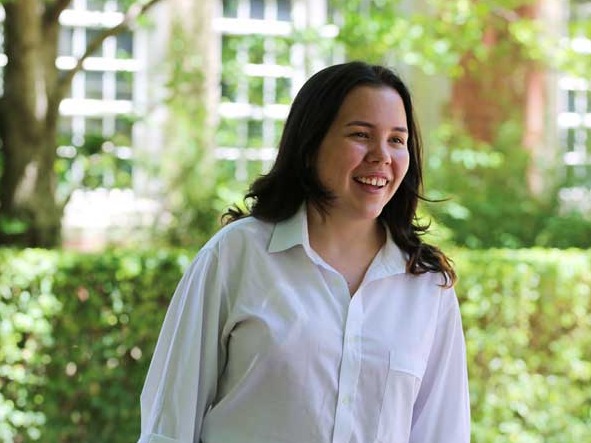
Combining her experience from the human structure and function major with her passion for visual arts, the Student Art Prize gave Jerrika the chance to show how art has always been part of scientific knowledge and Indigenous culture.
Jerrika Pevitt is a proud Gunditjmara woman who grew up in a small rural town. Most of those around her didn’t know much about the local history of the First Nations people, so even as a high school student, Jerrika took it upon herself to draw attention to the Indigenous history in the National Curriculum. In her high school history class, Jerrika found her taking over from the teacher to speak on the Indigenous History of the country on which the class was being taught – the land of the Gunditjmara people.
Since coming to study a Bachelor of Science at the University of Melbourne, Jerrika’s found ways to include her learnings about her culture in her studies and combined her interests in science and art.
“Science and art were two things I’ve always felt like I had to choose between, but I want to find ways we can put knowledge into art. Coming to university, I’ve found something that I’m passionate about in the science world, and being able to translate that to an art perspective has been a really fun challenge.”
Creating connections between disciplines is a key part of the interdisciplinary learning in the Bachelor of Science. These creative outlets can help us see new ways of understanding how things work and to find new ways to approach problems. Many students find interdisciplinary outlets through a breadth subject, and for Jerrika, this came through incorporating subjects from the Faculty of Fine Arts and Music into her science degree.
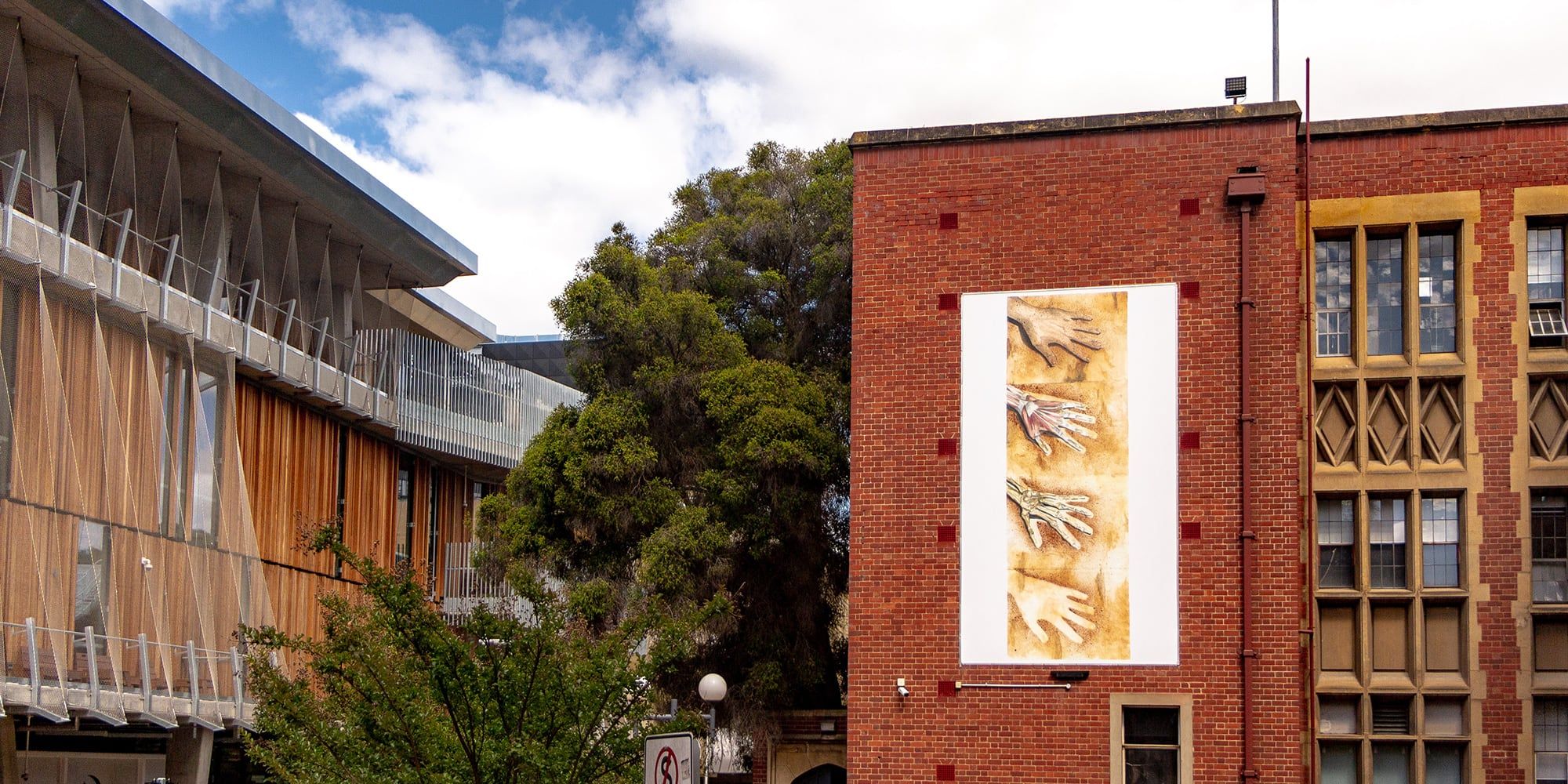
As part of a subject on drawing anatomy, Jerrika chose to integrate traditional ways anatomy has been explored by Indigenous culture throughout history. Thinking back on the cave paintings, handprints and even anatomical paintings of kangaroos, Jerrika decided to explore how this history could inspire her own studies in anatomy.
“The thought of the cave paintings and someone, at some point, having their hand up against the wall in that location is so cool to me. In our lectures, we talked about traditional ways anatomy has been explored and the illustrations of kangaroo anatomy with their hearts and intestines shows that there’s a long history of this kind of study.”
Demonstrating this kind of indigenous knowledge within science highlights how the knowledge and history of local cultures has always been relevant to local communities.
Learning about anatomy and stripping back the layers can have many different interpretations. Choosing to challenge herself with drawing a hand, something Jerrika’s always struggled to draw, became a way she could highlight how the historical and scientific answers are there - if you dig deep enough.
“Stripping the layers and showing the anatomy can have many different interpretations. It’s so easy to strip things back and assume the answers are there, but with Indigenous culture, it’s buried so deep and we’re discovering new things about our culture as we learn.”
Jerrika applied for the Student Art Prize with inspiration from her mother, who has her own artistic practice, as a way to build this connection between her scientific studies, artistic passions and exploration of Indigenous art practice.
“Having my work displayed at such a large scale really shows the artwork in a different light, with a new meaning. This class meant we could explore traditional ways anatomy has been explored throughout history, and being able to see how Indigenous knowledge can help us learn about anatomy and function over time has been so influential in my studies.”
The artwork represents the first step towards reconciliation and using Gunditjmara country ochre, is about the sacred rite of passage to Indigenous adulthood. Stenciled from Jerrika’s own hand, the elements are intended to reflect the layers that reveal humanness.
“Even though I was kind of known as the science kid, the Student Art Prize meant I could bring in the influences from traditional artists, my mentors and my experience at uni to combine scientific and artistic practice. I hope seeing this piece might provoke something different in everyone. I want to educate people and inspire people to educate themselves."